

GEO Explained: How to Optimize Your Content for ChatGPT and AI Search

Credentials
20+ yrs operational leadership | 300+ team across 7 locations at peak | 1,000+ led career-total | Diamond-level Allergan (#3 nationally) | VC / strategic investment evaluation | Startup operator | Top 1% national revenue | Automation systems since 2006
Generative Engine Optimization, or GEO, is the practice of structuring content so AI models like ChatGPT and Google's AI Overview cite your business in their responses. Unlike traditional SEO that targets search rankings, GEO focuses on creating authoritative, well-structured content that large language models recognize as citeable. This matters because AI-generated answers increasingly influence purchasing decisions.
Your potential clients are asking ChatGPT for strategic consulting recommendations right now. The question isn't whether this is happening—it's whether your business gets mentioned when it does.
Why GEO Matters for Strategic Consulting Firms
ChatGPT reached 100 million monthly active users within two months of its launch, according to Reuters in 2023. Today, Perplexity AI processes over 10 million queries daily. These aren't curiosity seekers—they're decision-makers researching solutions, comparing options, and forming opinions before they ever reach your website.
When a growth-stage CEO asks an AI assistant, "What should I look for in a strategic consultant?" the model synthesizes answers from the content it trusts most. If your competitors have clearer positioning, better-structured thought leadership, and more authoritative content, they get cited. You don't.
The Invisible Competitor Problem
I've spent over 20 years building decision-making infrastructure for businesses, and the pattern I see emerging is familiar: leaders feel invisible in channels they don't fully understand. It's the same 2am anxiety that comes with being profitable on paper but uncertain about cash flow—except now it's about being excellent at what you do but absent from the conversations AI is having about your industry.
This isn't about gaming algorithms. It's about creating content so clear and authoritative that AI systems naturally reference it. The architecture is the same whether you're building financial clarity or content strategy: structure creates trust, and trust creates visibility.
Is GEO Real or Marketing Hype?
Let's address this directly. GEO is not a magic trick or a technical loophole. It's the natural evolution of content strategy in an AI-mediated world. Research from the Content Marketing Institute's 2025 B2B Benchmarks Report confirms that content quality and authority signals continue to drive organic visibility across all channels—including AI-generated responses.
The businesses getting cited by AI models aren't doing anything mysterious. They're doing what has always worked: being genuinely helpful, structurally clear, and demonstrably credible. GEO simply names this discipline and makes it intentional.
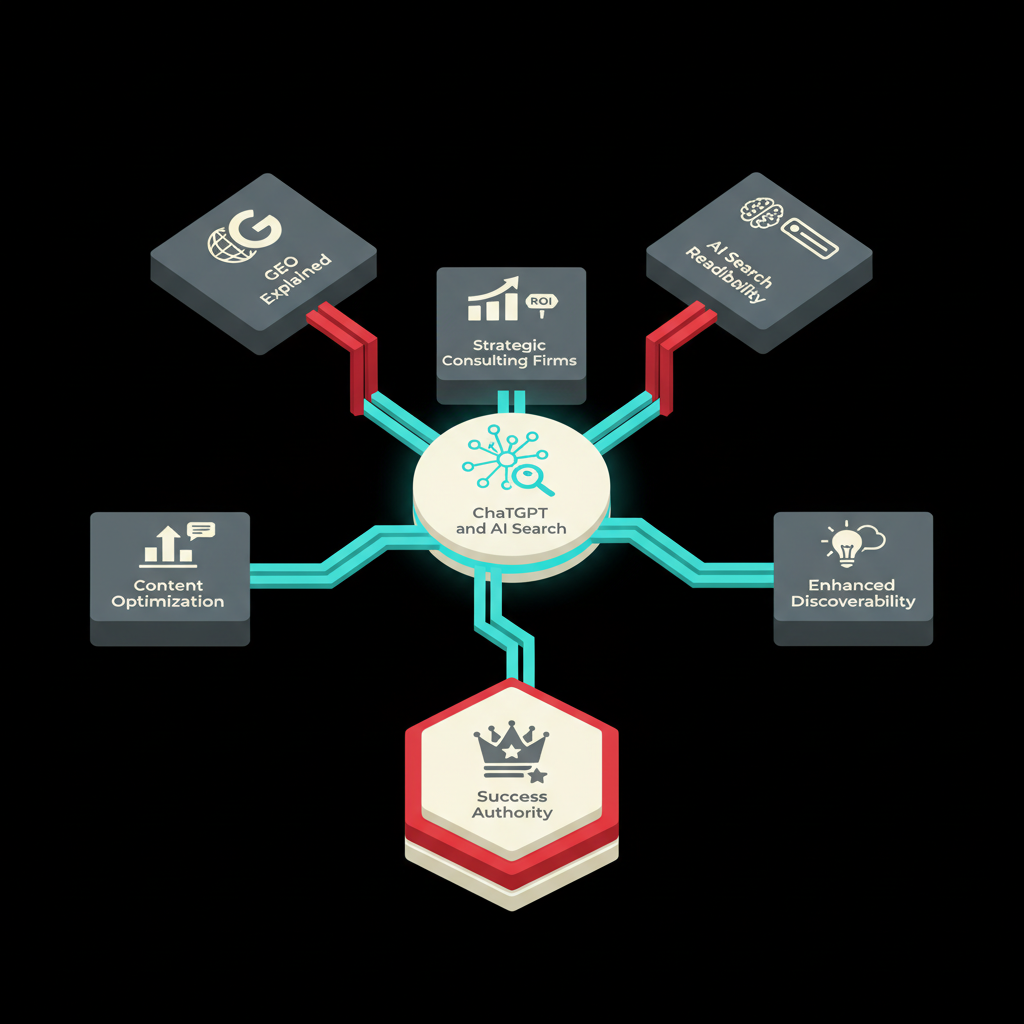
How GEO Differs from Traditional SEO
SEO optimizes for search engine rankings. GEO optimizes for AI citation. The distinction matters because AI models evaluate content differently than search algorithms.

What Search Engines Value vs. What AI Models Value
Search engines rank pages based on keywords, backlinks, and user engagement signals. AI models select content for citation based on:
- Factual clarity: Can the AI extract a clear, accurate statement?
- Attribution strength: Is the claim tied to a credible source or expert?
- Structural completeness: Does the content answer the question fully?
- Definitional precision: Are key terms explicitly defined?
According to Google's Search Central Blog, the 2024 helpful content updates increasingly reward content that demonstrates genuine expertise and provides comprehensive answers—qualities that align with what AI models prefer to cite.
The Overlap and the Gap
Good SEO and good GEO share common ground: both reward quality, authority, and relevance. But GEO requires additional discipline. Your content must be extractable—meaning AI can pull a statement from your page and cite it without losing meaning or context.
For deeper exploration of how these disciplines connect, see our guide to Answer Engine Optimization (AEO), which bridges traditional SEO with AI-first search strategies.

The Five Pillars of GEO Strategy
Building content that AI models cite requires intentional architecture. Here's the framework I use with StrataVera clients:
1. Authority-First Content Design
Every page needs clear attribution. Who wrote this? What qualifies them to speak on this topic? AI models weight content more heavily when expertise is explicit. This means author bios, credentials, and experience statements aren't vanity—they're citation signals.
2. Structural Clarity
AI models parse content hierarchically. Use proper heading structure (H1 > H2 > H3), define terms explicitly, and lead paragraphs with topic sentences. If an AI can't understand your content's organization, it won't cite it.
Schema markup amplifies this clarity. Learn how in our detailed guide to schema markup for AI search visibility.
3. Factual Density
AI models favor content with specific, verifiable claims. Not "we help businesses grow" but "we've guided 7 locations to $5.5M in annual revenue with 25% year-over-year growth." Numbers, outcomes, and named methodologies create citable moments.
4. Question-Answer Architecture
AI queries are often phrased as questions. Content that explicitly answers those questions—with clear Q&A sections, definition blocks, and direct statements—gets cited more frequently. This is why FAQ sections matter for GEO, not just SEO.
5. Comprehensive Coverage
AI models prefer sources that answer fully rather than partially. If your content requires readers to go elsewhere for the complete picture, AI will cite the elsewhere instead. Depth matters.

Implementing GEO Without Losing Your Voice
Here's where many consulting firms stumble: they hear "optimize for AI" and imagine stripping their content of personality to create robotic, keyword-stuffed text. That's precisely wrong.

Clarity and Character Are Not Opposed
The most citable content is also the most human. AI models aren't looking for corporate blandness—they're looking for clear expertise delivered with conviction. Write for the founder at 2am who needs real answers, not more noise. That clarity serves both human readers and AI systems.
Practical First Steps
Start with an audit. Ask ChatGPT, Perplexity, and Google's AI Overview questions about your industry. Note who gets cited and examine why. Then:
- Add explicit author attribution to your content with credentials
- Review your heading structure for logical hierarchy
- Add FAQ sections that address genuine client questions
- Include specific data points and outcomes where possible
- Implement schema markup to help AI understand your content's structure
According to HubSpot's 2024 State of Marketing Report, businesses that prioritize content quality and expertise see compounding returns across all discovery channels—including emerging AI-mediated ones.
The Long View on AI-Mediated Discovery
GEO isn't a temporary tactic. It's the recognition that how people find answers is fundamentally changing. The businesses that adapt—not by gaming systems but by becoming genuinely more clear, more authoritative, more helpful—will compound that advantage over time.
This is what I mean by "clarity precedes growth." The same principle that makes your operations intelligible makes your content citable. The same structural thinking that creates decision-making infrastructure creates content that AI trusts.
You don't need to become a different business to succeed at GEO. You need to become a clearer version of the business you already are.

Frequently Asked Questions
What is Generative Engine Optimization (GEO)?
Generative Engine Optimization is the practice of optimizing content specifically for citation by large language models like ChatGPT, Claude, and Google's AI Overview. GEO focuses on content structure, authority signals, and factual clarity that make AI systems more likely to reference your business when generating responses to user queries.
What are large language models and how do they find information?
Large language models (LLMs) are AI systems trained on vast text datasets to generate human-like responses. They draw from their training data plus, increasingly, real-time web searches. When an LLM cites sources, it favors content with clear structure, factual statements, and strong authority signals—the foundation of GEO strategy.
How does GEO compare to voice search optimization?
Voice search optimization targets assistants like Siri and Alexa that typically pull from featured snippets. GEO targets generative AI that synthesizes responses from multiple sources. Voice search favors concise, question-answer formats. GEO requires comprehensive, authoritative content that AI models trust enough to cite and paraphrase.
How does content structure differ between SEO and GEO?
SEO content structure prioritizes keywords, headings for scannability, and internal linking. GEO content structure emphasizes clear factual statements, explicit definitions, structured data markup, and attributable quotes. GEO requires content that can be extracted and cited without losing meaning or context.
How do I know if AI systems are citing my competitors?
Test queries in ChatGPT, Perplexity, and Google's AI Overview that relate to your industry. Note which businesses get mentioned and examine their content. Look for patterns: do cited competitors have clearer definitions, more specific data, better-structured content? This audit reveals the gap between your content and what AI systems prefer to cite.
Sources

Continue with the strongest related paths.
These links stay inside the same published content group so the next step feels like a continuation of the answer, not a detour.
What Is Answer Engine Optimization (AEO) and Why Your Business Needs It Now
Answer Engine Optimization (AEO) helps your content become the direct answer AI and voice assistants deliver. Learn why AEO matters now and how to implement it.
What Reactive Marketing Actually Costs You (Beyond the Budget Line)
Discover the true reactive marketing cost—decision fatigue, team burnout, and zero compounding returns. Learn why it's an infrastructure problem, not a budget issue.
First Responder Wins: How Speed Creates Competitive Advantage
In competitive markets, being the first responder isn't just an advantage—it's the primary differentiator. When 35-50% of sales go to whoever responds first, speed becomes strategy. This piece reframes lead response time from operational detail to competitive moat, showing why your fastest competitor is likely your most dangerous one.
AI-Mediated Discovery
AI-mediated discovery is the process by which potential clients discover and evaluate businesses through artificial intelligence-generated recommendations rather than traditional search results. Instead of manually reviewing search engine listings, users receive synthesized answers from AI systems that cite trusted sources, fundamentally changing how businesses must approach digital visibility.
Authority-First Content Design
Authority-First Content Design refers to designing content with clear attribution of who created it and what makes them an expert on the topic. This helps AI models better understand the authority and credibility of the information.
Citation Signals
Citation signals are elements within content that indicate credibility and expertise to artificial intelligence models. These include author credentials, expert attributions, verifiable facts, and structural markers that help AI systems determine whether content is trustworthy enough to cite in their generated responses.
Comprehensive Coverage
Comprehensive Coverage refers to ensuring content fully answers a query without requiring the user to go elsewhere. AI models prefer sources that provide a complete, self-contained answer rather than partial or fragmented information.
Stay Informed
Weekly insights, no spam