

A Game Without Rules Isn't Worth Playing: Why Your Team Can't Win Without Clear Expectations

Credentials
20+ yrs operational leadership | 300+ team across 7 locations at peak | 1,000+ led career-total | Diamond-level Allergan (#3 nationally) | VC / strategic investment evaluation | Startup operator | Top 1% national revenue | Automation systems since 2006
Teams without clear, documented rules experience 37% higher project failure rates due to misalignment. When expectations exist only in a leader's head, employees guess at priorities, make inconsistent decisions, and eventually disengage. Documented rules create shared understanding that enables autonomous decision-making and reduces leadership bottlenecks.
The Hidden Cost of Invisible Standards
Every organization has rules. The question isn't whether they exist—it's whether they're visible, consistent, and actionable. When rules live only in leaders' heads, teams operate in a perpetual state of interpretation, second-guessing, and reactive correction.
Consider the mathematics of unclear expectations: if each of your ten employees makes three decisions daily based on their own interpretation of unstated standards, you're managing thirty potential points of misalignment every day. Multiply that across weeks, and the compounding effect becomes staggering—not just in lost productivity, but in the erosion of trust and confidence.
Why Verbal Expectations Fail at Scale
The human brain processes approximately 11 million bits of information per second but can only consciously handle about 40. When you communicate expectations verbally, you're competing with this cognitive bottleneck, relying on memory systems that decay within hours of transmission.
The Memory Degradation Problem
According to neuroscience research, people forget 50% of new information within an hour and 70% within 24 hours. This isn't a failure of attention—it's basic cognitive architecture. When your "rules" exist only in conversations, they're subject to the same degradation patterns as any other verbal information.
Furthermore, each person filters verbal instructions through their existing mental models, previous experiences, and current priorities. What sounds crystal clear to you becomes interpreted, modified, and inadvertently customized by each recipient. The result isn't defiance—it's divergence.
The Illusion of Control
Being needed for every decision can feel like leadership. It's not. It's a symptom of a system that can't function without you—which means it's a system that can't scale. Research from the Harvard Business Review on delegation effectiveness shows that leaders who fail to create clear decision-making frameworks become organizational bottlenecks, reducing team velocity by 40-60%.
True leadership creates frameworks that enable others to make good decisions independently. That requires documented rules: clear boundaries within which people can operate autonomously, standards they can reference without asking permission, and expectations they can meet without mind-reading.
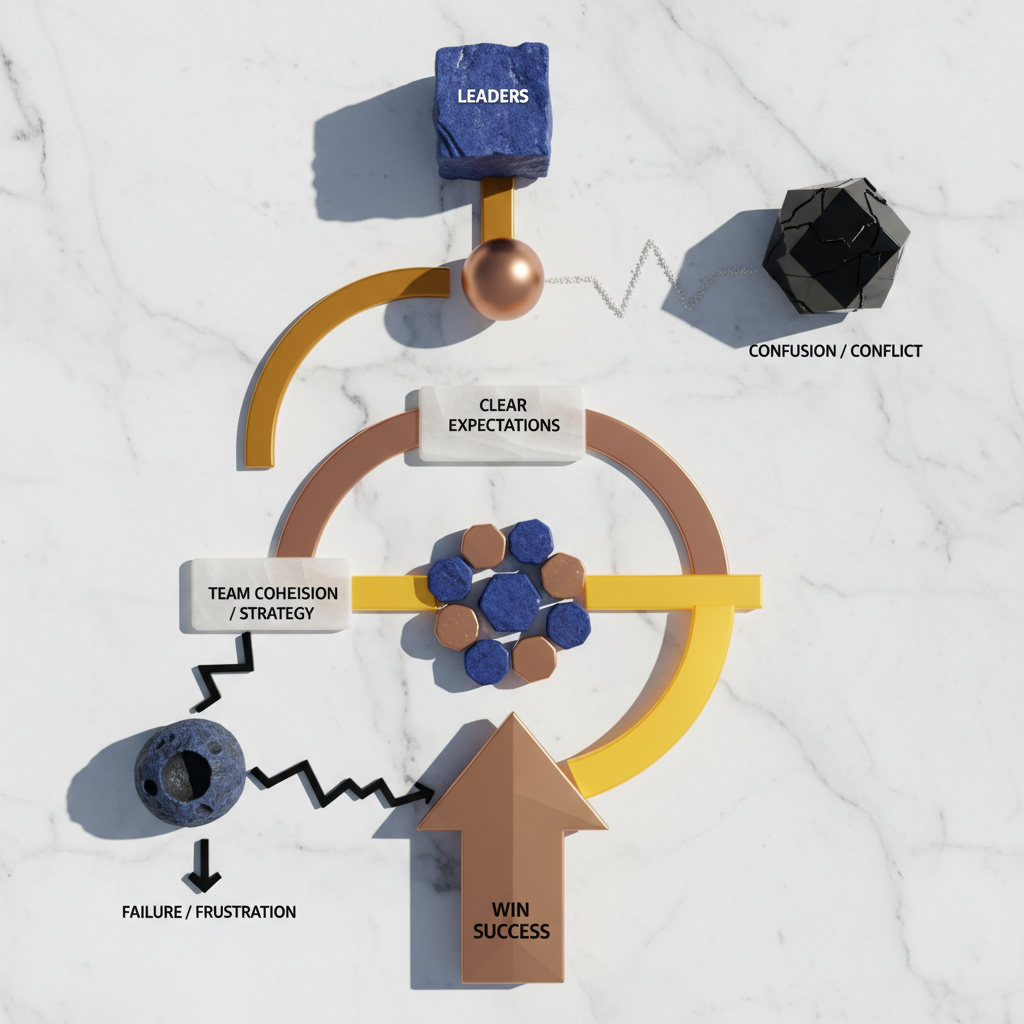
The Neuroscience of Decision-Making Under Ambiguity
When faced with unclear expectations, the human brain defaults to familiar patterns rather than optimal choices. This isn't laziness—it's neurological efficiency. The prefrontal cortex, responsible for complex decision-making, consumes significant cognitive resources. When rules are ambiguous, it conserves energy by reverting to previously successful behaviors, even when those behaviors aren't contextually appropriate.
This explains why good employees make seemingly obvious mistakes when rules aren't clear. They're not failing to think—they're thinking efficiently within an inefficient system. The solution isn't better people; it's better architecture.
Building a Defined Cultural Ecosystem
Clear rules aren't restrictions. They're the architecture that makes autonomy possible. Like traffic signals that enable smooth flow by establishing predictable patterns, organizational rules create the structure within which creativity and initiative can flourish.
How does a cultural ecosystem compare to a policy handbook?
What are the components of a defined cultural ecosystem?
The Interconnected Components
A defined cultural ecosystem isn't a collection of isolated documents—it's an integrated system where values, SOPs, KPIs, policies, and behavioral standards reinforce each other. Values inform policy decisions, policies shape standard operating procedures, SOPs drive key performance indicators, and accountability mechanisms maintain the entire structure.
Consider how these elements interact in practice: a company value of "customer obsession" informs a policy requiring 24-hour response times, which shapes an SOP for ticket triage, which drives a KPI measuring average response time. Each element validates and strengthens the others, creating systemic coherence rather than document chaos.
Understanding how SOPs, KPIs, and policies form cultural architecture provides the framework for building this ecosystem deliberately rather than accidentally.
The Feedback Loop Effect
When cultural ecosystems function properly, they create positive feedback loops. Clear expectations lead to consistent performance, which generates reliable outcomes, which builds trust, which enables greater autonomy, which reduces management overhead, which creates capacity for strategic thinking. The system becomes self-reinforcing.
Without this ecosystem, you're managing exceptions rather than establishing norms. Every situation becomes unique. Every decision becomes a judgment call. And every judgment call flows back to you, creating the management bottleneck that prevents scaling.
Documentation as Liberation
Most leaders resist documentation because it feels bureaucratic. This resistance stems from confusing documentation with bureaucracy—they're not the same thing. Bureaucracy creates process for its own sake; documentation creates clarity for results' sake.
Consider the alternative: you become the single point of reference for every standard, every expectation, every "how do we handle this?" question. Your brain becomes the organizational hard drive, and like any single point of failure, it creates system vulnerability. When you're unavailable, decisions stall. When you're overwhelmed, quality suffers. When you leave, institutional knowledge walks out the door.
Documentation isn't bureaucracy—it's liberation. For you and your team. When rules are written, employees can self-correct without embarrassment, train new teammates without confusion, and make decisions confidently because the boundaries are visible. You can focus on the strategic work that actually requires your unique expertise rather than repeatedly answering questions that could be answered by a well-designed system.
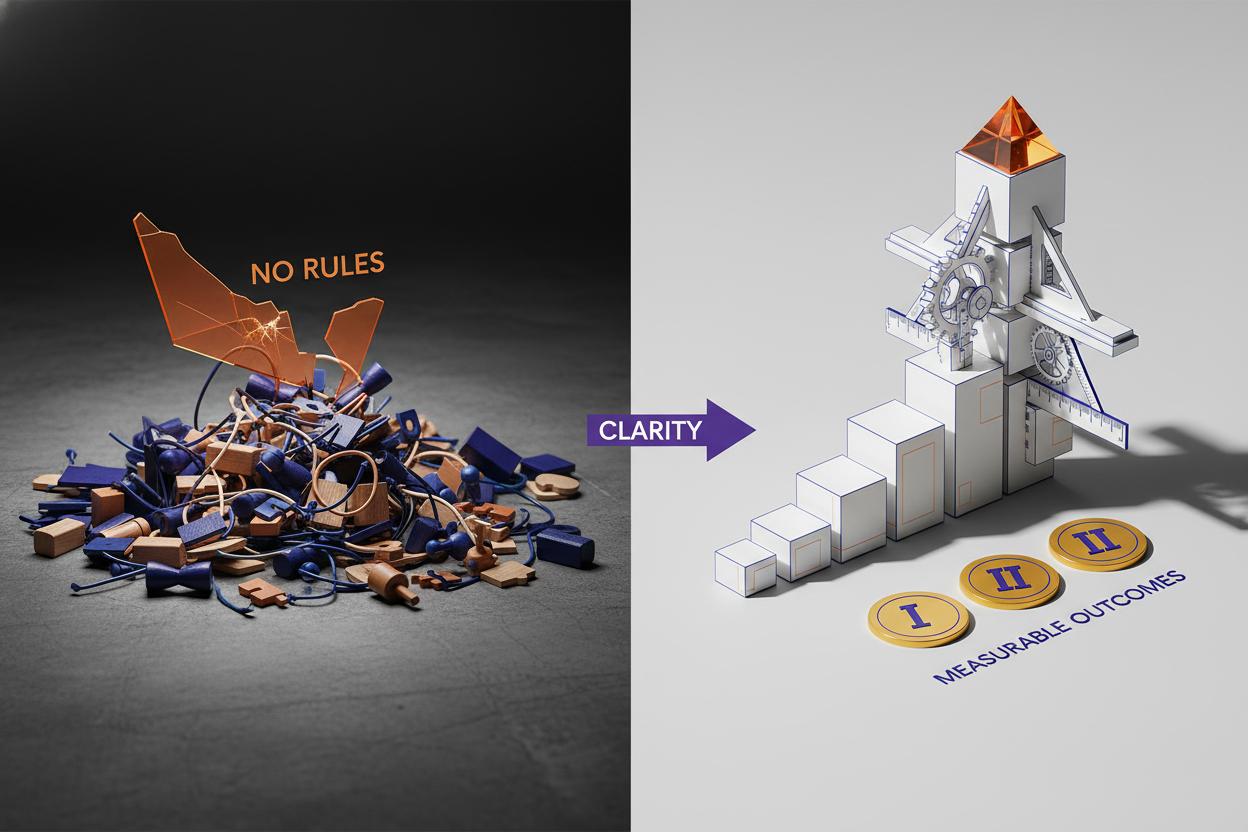
The Economics of Clarity
McKinsey research on organizational transformation indicates that 65-75% of change initiatives fail partially due to unclear expectations and accountability structures. The economic impact is measurable: organizations with well-defined cultural ecosystems report 23-31% higher productivity and 18-25% better customer satisfaction scores.
These aren't soft benefits—they're hard financial outcomes. Every minute spent clarifying unclear expectations is a minute not spent on value creation. Every decision delayed by ambiguity is a competitive opportunity lost. Every miscommunication that requires correction costs not just the time to fix it, but the trust that was damaged in the process.
The Path Forward: Rules Worth Playing By
A game without rules isn't a game at all. It's chaos with a scoreboard. But effective rules do more than prevent chaos—they enable excellence by creating predictable frameworks within which unpredictable challenges can be addressed.
Start With Decision Velocity Analysis
Rather than documenting everything at once, identify the decisions that create the most friction in your organization. These are typically the choices that generate the most questions, require the most approvals, or result in the most inconsistent outcomes.
Map these decisions by frequency and impact. High-frequency, high-impact decisions should be your first documentation priority. Create decision trees, establish approval thresholds, and define escalation paths. The goal isn't to remove human judgment—it's to ensure that judgment operates within clear parameters.
The Clarity Test Framework
Good rules pass three tests: they're specific enough to guide action, flexible enough to handle edge cases, and clear enough that new employees can apply them without extensive explanation. If your documented standard requires a 20-minute explanation to be understood, it's not clear enough. If it can't handle obvious variations in context, it's not flexible enough.
Test your rules by having different team members interpret them independently, then compare results. Divergent interpretations reveal ambiguity that needs resolution. The investment in clarity up front pays dividends in consistent execution over time.
Building Implementation Momentum
Don't wait for perfect documentation before you begin. Start with the 80% solution and improve through iteration. Create rough drafts of your most critical rules, test them in real situations, and refine based on outcomes. The perfect rule that never gets written helps no one; the good rule that gets applied and improved helps everyone.
Involve your team in the documentation process. They understand the nuances of implementation that leaders often miss. Their input improves accuracy, and their participation increases buy-in. Rules created collaboratively are followed more consistently than rules imposed unilaterally.
Beyond Compliance: Rules as Competitive Advantage
Organizations that master the art of clear expectations don't just avoid problems—they create competitive advantages. When your team can make good decisions quickly and independently, you respond faster to market changes. When your standards are clear and consistent, your customer experience becomes predictably excellent. When your rules enable rather than restrict, innovation flourishes within proven frameworks.
The difference between teams that execute consistently and teams that struggle isn't talent, resources, or market conditions. It's clarity. And clarity doesn't happen by accident—it happens when leaders take the time to write down what everyone needs to know and make sure they can actually find it when they need it.
Your team wants to win. They want to meet your expectations, make decisions you'd be proud of, and contribute to outcomes that matter. They're not failing because they don't care—they're struggling because they don't know the rules of the game you want them to play.
The solution isn't better people. It's better rules. Rules that guide without constraining, enable without overwhelming, and create the framework within which excellent performance becomes not just possible, but probable.
The game is worth playing. Your team is worth winning. They just need to know the rules.

Frequently Asked Questions
What does it mean when a team doesn't know the rules of the game?
When a team doesn't know the rules, they lack documented expectations for behavior, performance standards, and decision-making authority. This creates guesswork instead of clarity—employees make inconsistent choices, managers spend time correcting rather than leading, and alignment becomes impossible. The result is fragmented execution and eroded trust, with research showing that 35-39% of organizational failures stem from unclear expectations.
What is a defined cultural ecosystem in business?
A defined cultural ecosystem is the interconnected system of values, SOPs, KPIs, policies, and behavioral standards that govern how decisions get made and work gets done. Unlike isolated documents, an ecosystem ensures these elements reinforce each other—values inform policies, policies shape SOPs, SOPs drive KPIs, and accountability maintains the whole structure. Organizations with well-defined cultural ecosystems report 23-31% higher productivity rates.
How do clear rules compare to verbal expectations in team management?
Documented rules create shared reference points that survive memory degradation, mood changes, and personnel transitions—verbal expectations don't. Neuroscience research shows people forget 50% of verbal information within an hour and 70% within 24 hours. Written rules enable consistent enforcement, reduce favoritism perceptions, and allow employees to self-correct without manager intervention, with Harvard Business Review research indicating that clear decision-making frameworks reduce organizational bottlenecks by 40-60%.
What's the difference between team rules and team restrictions?
Rules create freedom by establishing boundaries within which people can operate autonomously; restrictions limit without enabling. Effective rules answer 'how do I win here?' while restrictions only answer 'what can't I do?' Research on delegation effectiveness shows that organizations with clear decision-making frameworks reduce bottlenecks because employees don't need permission—they have frameworks for independent action that maintain quality standards.
Why do employees make bad decisions when rules aren't clear?
Without documented standards, employees rely on neurological efficiency patterns, reverting to previously successful behaviors even when contextually inappropriate. Each person creates their own invisible rulebook based on interpretation, past experiences, and observed tolerances, leading to inconsistent customer experiences and misaligned priorities. McKinsey research indicates that 65-75% of change initiatives fail partially due to unclear expectations and accountability structures.
How much productivity is lost from unclear team expectations?
Organizations with poorly defined expectations experience measurable productivity losses, with research indicating 23-31% lower productivity compared to companies with clear cultural ecosystems. The Project Management Institute reports that 35-39% of projects fail due to poor communication and unclear requirements, while Harvard Business Review research shows unclear decision-making frameworks create organizational bottlenecks that reduce team velocity by 40-60%.
Sources
Continue with the strongest related paths.
These links stay inside the same published content group so the next step feels like a continuation of the answer, not a detour.
SOPs, KPIs, and Policies: Building the Architecture of a Culture That Actually Works
Your SOPs tell people what to do. Your KPIs tell them if they did it well. Your policies tell them where the boundaries are. But most organizations create these in silos, wonder why they conflict, and blame employees for the confusion. This article shows how to architect these elements as an integrated system that compounds clarity instead of creating contradiction.
The Hidden Value in a Defined Cultural Ecosystem: Why Your Business Needs More Than Good Intentions
You have values on a wall, a handbook gathering dust, and unwritten rules everyone pretends to follow. But a cultural ecosystem isn't a collection of documents—it's a living architecture where each element reinforces the others. This article reveals how integrated systems create compound returns that scattered policies never will.
Accepted Behavior Is Viewed as Endorsed: The Silent Message Your Inconsistency Sends
Every time you let something slide, you've just created a new policy. Your team watches what you tolerate more closely than what you announce. This article unpacks why inconsistent enforcement destroys trust faster than having no rules at all—and how your silence is speaking volumes about what you actually value.
Defined Cultural Ecosystem
A Defined Cultural Ecosystem is an integrated organizational framework that deliberately connects values, standard operating procedures, performance indicators, policies, and behavioral standards. Each element reinforces the others, creating clear boundaries that enable employees to make autonomous decisions while maintaining alignment with organizational expectations.
Invisible Rulebook Problem
The Invisible Rulebook Problem refers to a systemic organizational issue where standards and expectations exist only in leaders' minds rather than documented form. This forces employees to guess at priorities by piecing together fragments of feedback and observations, resulting in inconsistent decisions and misalignment across teams.
Leadership Bottleneck Trap
The Leadership Bottleneck Trap is a self-reinforcing cycle where undocumented expectations force employees to seek approval for every decision. Without clear written standards, team members route all questions and gray areas to leadership, consuming executive time with issues that documented rules would resolve automatically and preventing the organization from scaling.
Tribal Knowledge
Tribal Knowledge refers to critical operational understanding that exists only in the experience and memory of long-term employees rather than in documented form. This knowledge is absorbed through years of context but disappears when employees leave, forcing replacements to reconstruct standards from scratch and creating repeated cycles of re-correction.
Stay Informed
Weekly insights, no spam