

Why Your Team Makes Inconsistent Decisions (And It's Not a Training Problem)

Inconsistent team decisions typically stem from missing brand identity, not training gaps. When your organization lacks articulated values and guiding principles, each team member creates their own decision-making framework. This produces chaos that looks like autonomy but destroys operational coherence. Clarity precedes growth—document your why before scaling your who.
You've noticed it. The same type of customer situation handled three different ways by three different team members. Pricing decisions that contradict each other. Customer service responses that feel like they came from different companies entirely. You've invested in training. You've hired smart people. Yet the chaos persists.
How do I audit my organization for brand identity gaps?
Here's what I've learned in my 20+ years of building decision-making infrastructure for growth-stage businesses: the problem isn't your people's capability. It's the absence of the invisible architecture that should be guiding every decision they make. You're blaming the crew for sailing in different directions when you never gave them a shared compass.
Building Your Brand Identity Architecture: A Framework for Values, Vision, and Guiding Principles
The Real Root of Decision Inconsistency
Why Training Alone Will Never Fix Alignment
Training teaches the "how." It builds competency around processes, systems, and skills. What training cannot do—what it was never designed to do—is answer the "why" behind ambiguous decisions. According to the U.S. Government Accountability Office's Standards for Internal Control, effective organizational control requires clearly defined objectives and a commitment to integrity and ethical values that permeate every level of decision-making.
When your team faces a situation not covered by procedure—and they will, daily—they reach for something to guide their choice. Without articulated organizational values, they reach for their own. Their personal judgment. Their past experiences. Their assumptions about what you would want.
This isn't insubordination. This is the natural human response to operating without decision-making infrastructure. You've asked them to navigate without coordinates.
The Invisible Cost of Missing Brand Identity
Research from 2023-2024 on employee branding demonstrates that organizations with clearly articulated brand values show significantly higher employee alignment on decision-making priorities. The inverse is equally true: missing brand identity organizational chaos compounds with every new hire, every new situation, every day you delay building this foundation.
I've watched this pattern destroy operational coherence in businesses across industries—from medical aesthetics practices hitting Diamond Allergan status while bleeding profit, to insurance agencies watching agent productivity crater during Annual Enrollment Period because no one shared a framework for prioritization.
The cost isn't just inconsistent customer experiences. It's the invisible tax of you needing to be involved in every decision. The 2am anxiety wondering what choices were made while you slept. The exhaustion of being the only compass in your organization.
What Brand Identity Actually Means for Operations
Beyond Logos: The Decision-Making Infrastructure You're Missing
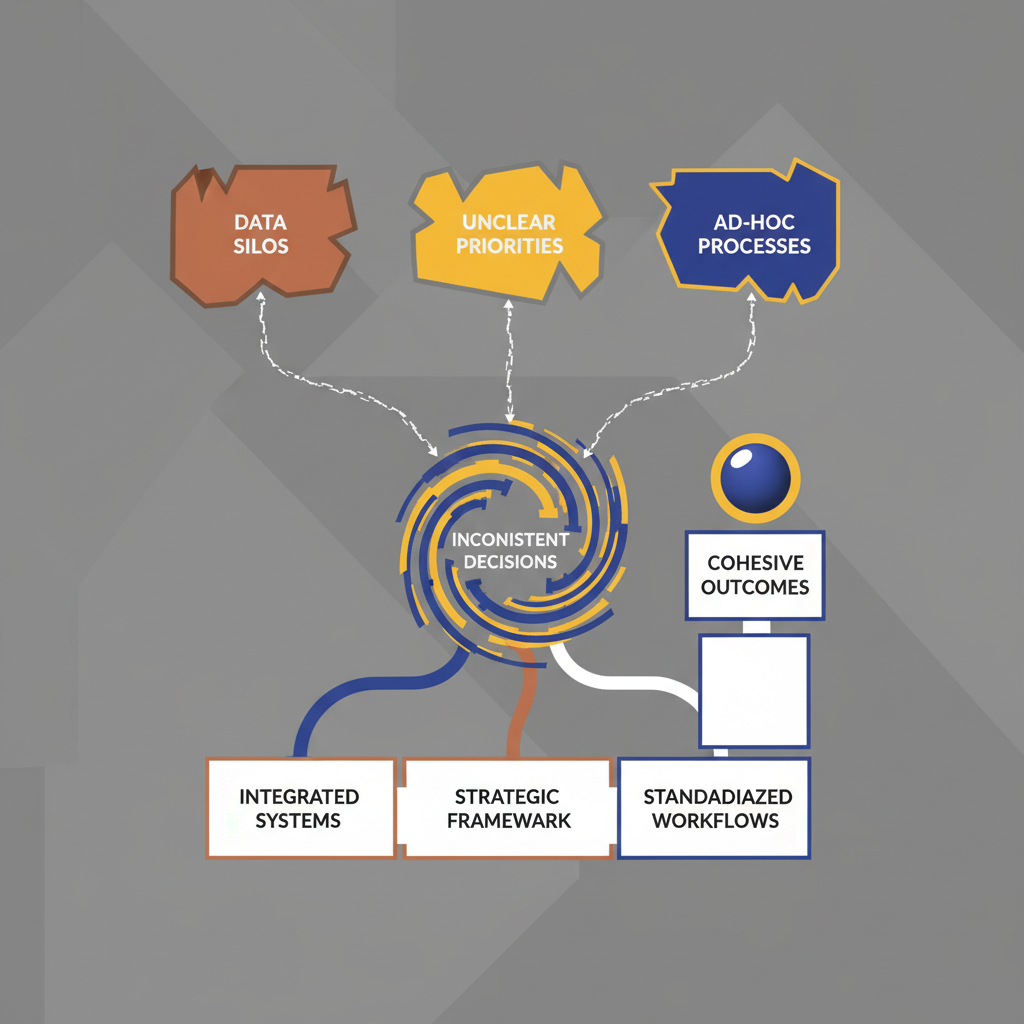
Brand identity isn't your visual identity. It's not your logo, your color palette, or your tagline. In the context of organizational operations, brand identity encompasses your mission, vision, values, and the fundamental 'why' behind your business. It's the decision-making infrastructure that guides how your team thinks, acts, and prioritizes.
Implementing Brand Identity Into Organizational Systems: From Foundation to Daily Operations
Brand Identity Gap Assessment: Signs Your Culture Needs Architecture, Not Band-Aids
What is the ROI of implementing brand identity into organizational systems?
What is a brand identity gap assessment?
Think of it this way: your brand identity should answer questions your procedures manual never will. "Should we give this unhappy customer a full refund or partial credit?" "Do we prioritize speed or thoroughness when we're behind?" "When two priorities conflict, which wins?"
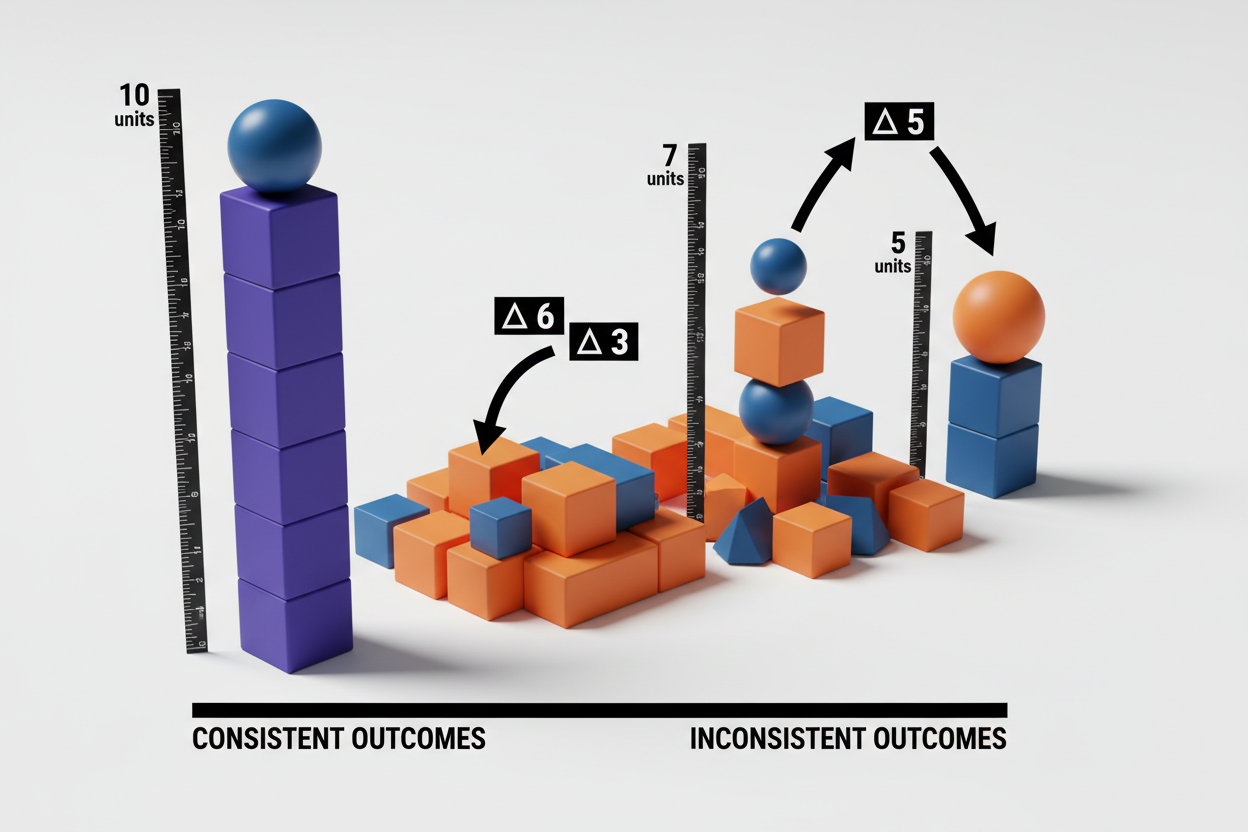
Without documented answers to these philosophical questions, you get what feels like autonomy but functions as chaos.
Values Versus Guiding Principles: The Critical Distinction
Values are the non-negotiable beliefs your organization holds—what you stand for regardless of circumstance. Guiding principles are the practical applications of those values—how values translate into daily decisions and behaviors.
Values answer "what matters." Principles answer "how we act on what matters."
Most organizations that have values have them hanging on a wall somewhere, forgotten. What they lack are the operational principles that translate those values into decision-making guidance. According to the FCA Performance and Accountability Report FY2025, organizational effectiveness depends on translating strategic objectives into measurable, actionable criteria that guide daily operations.
The Symptoms You're Misdiagnosing
When Inconsistency Looks Like a People Problem
You've likely attributed decision inconsistency to one of these causes:
- "They need more training." So you invest in another workshop, another certification, another onboarding module. The inconsistency persists.
- "I hired the wrong people." So you raise the bar, tighten the interview process, maybe even let someone go. The replacement makes the same types of inconsistent decisions.
- "They don't care enough." So you implement performance metrics, incentive structures, accountability systems. The metrics improve; the alignment doesn't.
None of these diagnoses are wrong, exactly. They're just incomplete. They treat symptoms while the underlying condition—missing organizational identity—continues to spread.
The Three Pain Points That Signal Missing Infrastructure
In my work with enterprise and growth-stage businesses, three complaints signal missing brand identity almost without exception:
"My team makes decisions that don't align with my vision." This means your vision exists only in your head. You've never externalized the decision-making criteria that let others share it.
"I feel like I have to be involved in every decision." This means you've become the only source of organizational truth. You are the brand identity, which means you cannot scale, cannot rest, cannot trust.
"Our customers have inconsistent experiences across team members." This means each team member has created their own interpretation of what "good" looks like. They're not wrong—they're unsynchronized.
These aren't character flaws in your team. These are signs your culture needs brand architecture—the structural foundation that makes aligned decision-making possible.

Building the Foundation: From Chaos to Clarity
Why Documentation Beats Discipline
The instinct when facing inconsistency is to tighten control. More approvals. More oversight. More consequences for getting it wrong. This approach fails because it treats the symptom (bad decisions) while ignoring the cause (no decision-making framework).
Studies from 2025 indicate corporate reputation directly correlates with internal value consistency, affecting both recruitment quality and retention rates. The organizations that attract and keep aligned team members aren't those with the strictest oversight—they're those with the clearest identity.
Documentation creates the infrastructure that discipline cannot. When your values are articulated, your principles are clear, and your "why" is accessible to everyone, you've given your team the tools to make decisions you'd be proud of—without requiring your presence.
The Compound Effect of Clarity
Here's what happens when you build this foundation:
- Decisions accelerate. Team members stop waiting for approval because they have the framework to decide confidently.
- Hiring improves. You can screen for values alignment, not just skill match.
- Customer experience stabilizes. Different team members, same organizational character.
- You breathe. The weight of being the only compass lifts.
Clarity compounds. Each aligned decision reinforces the next. Each new hire who understands the "why" strengthens the culture. Each customer interaction builds reputation consistency.
This is what I mean when I say we don't sell answers—we build the system that produces them. The architecture is universal; the application is industry-specific. But the principle holds: you cannot scale what you haven't articulated.
Your Next Step: Document Before You Scale
Start With the Questions, Not the Answers
You don't need a branding agency or a corporate retreat to begin. Start by identifying the decisions your team struggles with most. Where do inconsistencies show up? What situations keep landing on your desk that shouldn't?
Those friction points reveal the gaps in your decision-making infrastructure. Each one is a question your organization hasn't answered yet—at least not in a way that's accessible to everyone who needs it.
Growth doesn't start with having the right answers. It starts with feeling safe enough to ask better questions—and capable enough to build better answers.
The Shift From Managing Chaos to Trusting Systems
Most businesses scale chaos. They grow faster than their infrastructure can support, then spend years managing around the gaps they created. StrataVera exists to reverse this order.
Build the decision-making infrastructure first. Articulate the values. Document the principles. Create the compass. Then scale—with confidence that alignment will compound rather than fragment.
Your team isn't making inconsistent decisions because they're undertrained or uncommitted. They're making inconsistent decisions because you've asked them to navigate by stars you've never shown them.
Show them the stars. The navigation will follow.

Frequently Asked Questions
Sources
Continue with the strongest related paths.
These links stay inside the same published content group so the next step feels like a continuation of the answer, not a detour.
How Clean Books Increase Business Valuation: The Due Diligence Multiplier
When buyers look at your business, they're pricing risk as much as revenue. Messy books signal hidden problems even when there aren't any. This article provides the specific audit a business owner needs to prepare their financial systems for a valuation event—whether they're selling next year or in ten.
Accurate Data vs. Fast Data: Finding the Balance That Actually Improves Decisions
Learn how to balance data accuracy and speed for better business decisions. Discover the 'true enough, soon enough' framework that drives real results.
Building Your Brand Identity Architecture: A Framework for Values, Vision, and Guiding Principles
Build brand identity that guides decisions, not decorates walls. This framework connects purpose, vision, mission, and values into operational architecture.
Why are my financial reports always outdated?
Outdated reports typically stem from three causes: batch processing instead of real-time data entry, legacy systems that can't integrate with operational tools, and unclear ownership of reconciliation tasks. The fix isn't working harder—it's building systems that capture data at the point of transaction and automate the reconciliation process. Real-time isn't a luxury; it's a structural choice.
How do clean books compare to standard accounting practices?
Standard accounting practices ensure compliance with GAAP or tax regulations. Clean books exceed this standard by maintaining real-time reconciliation, consistent categorization that reveals operational insights, and documentation that supports due diligence. Standard practice is defensive; clean books are strategic—they create competitive advantage through clarity.
How does bookkeeping accuracy compare to financial visibility?
Bookkeeping accuracy means transactions are recorded correctly—the foundation. Financial visibility means you can see patterns, trends, and anomalies as they happen. Accurate books without visibility is like having a map you can only read once a year. You need both: accuracy creates trust in the data, visibility creates the ability to act on it.
13-Week Cash Flow Forecast
The 13-Week Cash Flow Forecast is a tool that projects a business's expected weekly cash position over the next 3 months. It accounts for when the business expects to collect receivables and when it must pay obligations, allowing the business to identify and address potential cash flow gaps before they occur.
44/24 Problem
The 44/24 Problem refers to the disconnect between the organizations reporting AI-driven workforce efficiency gains and those seeing corresponding profit impact. This suggests that efficiency without proper alignment and integration of AI can result in faster chaos rather than tangible business benefits.
Accuracy Anxiety
The cultural resistance to using 'good enough' data for decision-making, even when waiting for perfection is more costly.
burn rate
Burn rate refers to how quickly a company spends its available cash reserves to cover operating expenses. It's typically measured monthly and helps business owners understand how long they can continue operations before running out of money or needing additional funding.
Stay Informed
Weekly insights, no spam
Need help turning insight into action?
Keep building context through the quick-answer library, then step into the full playbook when you want frameworks, SOPs, and implementation support.