

What 'I Can't Afford It' Actually Means: The Objection That Reveals Your Consultation Gap

Credentials
20+ yrs operational leadership | 300+ team across 7 locations at peak | 1,000+ led career-total | Diamond-level Allergan (#3 nationally) | VC / strategic investment evaluation | Startup operator | Top 1% national revenue | Automation systems since 2006
When a prospect says 'I can't afford it,' they're usually signaling a value perception gap, not a budget limitation. About 90% of these objections mask other concerns. The real message is that your consultation didn't connect your solution to their actual pain point strongly enough to justify the investment.
You've just delivered what felt like a compelling consultation. The prospect nodded along, asked questions, seemed engaged. Then it arrives—the five words that sink your stomach: "I can't afford it."
Here's what most consultants get wrong: they hear a financial statement when the prospect is actually making an emotional one. This objection rarely emerges from an empty bank account. It surfaces from an unconvinced heart.
The Real Translation Behind 'I Can't Afford It'
When someone tells you they can't afford your solution, they're delivering feedback about your conversation—not their finances. The majority of these objections have a path forward because they're not actually about money. They're about something else entirely.
What They're Actually Saying
Listen beneath the surface. "I can't afford it" typically translates to one of these truths:
- "I don't see how this solves my specific problem." Your solution might be excellent—but they can't see themselves inside the transformation you're describing.
- "I'm afraid this won't work for me." They've been burned before. They've invested in promises that evaporated. The fear of wasted money overshadows the possibility of success.
- "I'm not sure now is the right time." They're weighing competing priorities, and your solution hasn't risen to the top because they don't feel the urgency.
- "I don't trust myself to follow through." Sometimes the hesitation isn't about you at all. It's about their own commitment patterns.
The Price Wasn't the Problem
Here's what every experienced consultant eventually learns: price isn't the problem. Perceived value is. If your offer isn't landing, lowering the price won't fix that—it just confirms their suspicion that it wasn't worth the original ask.
When you immediately offer a discount or payment plan, you communicate something troubling: "You're right, I was overcharging." This undercuts both your income and your authority. The prospect now wonders what else wasn't quite true in your presentation.
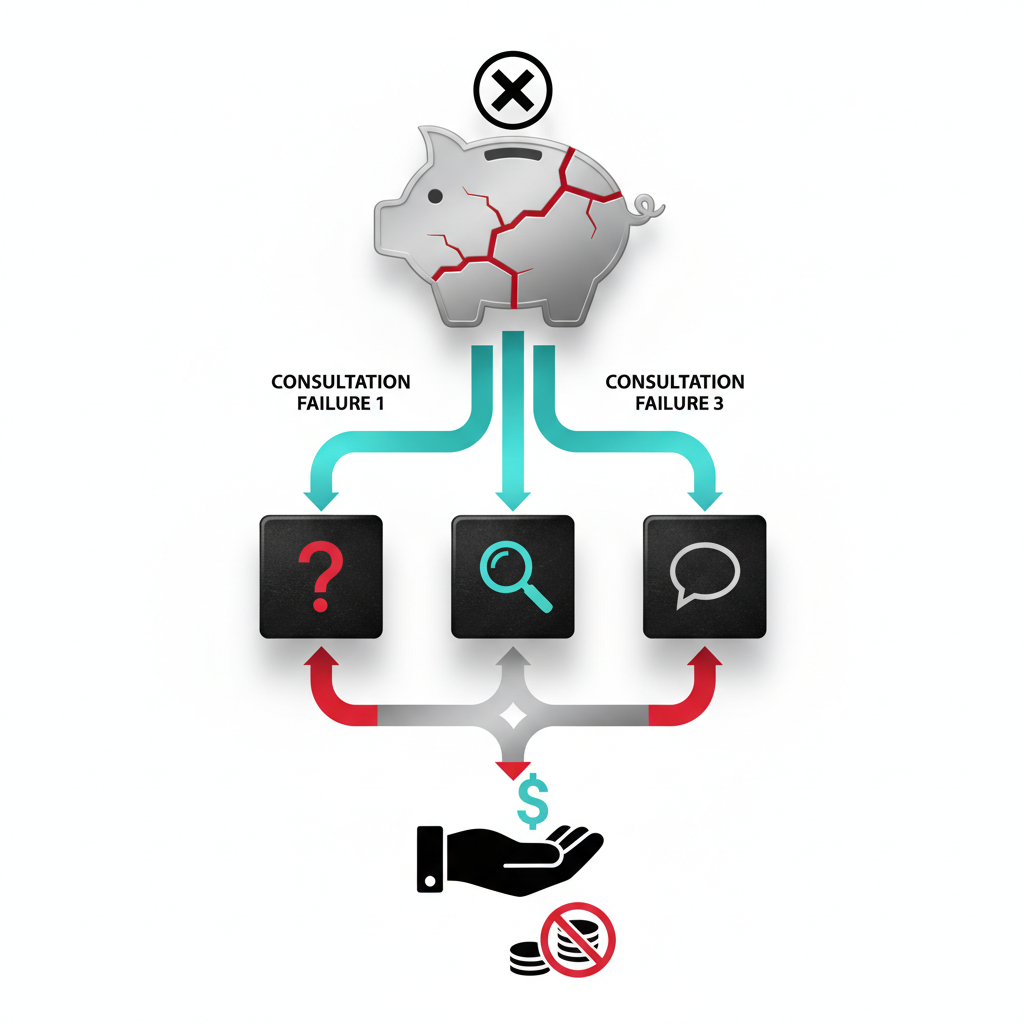
The Consultation Gap: Where Connection Breaks Down
Every "I can't afford it" objection points backward to a specific moment in your consultation where connection failed. Something was missed. A question wasn't asked. A pain point wasn't explored deeply enough.
The Three Most Common Consultation Failures
You solved a problem they didn't care about. You may have identified a real issue, but it wasn't the issue that keeps them awake at 2am. Until you locate the pain that feels urgent and personal, your solution remains academic.
You spoke features when they needed outcomes. They don't want a six-module program or a twelve-step framework. They want to stop feeling overwhelmed every Monday morning. They want to trust their team to execute without constant oversight. The transformation, not the mechanism, creates willingness to invest.
You didn't quantify the cost of inaction. Every day they don't solve this problem costs them something—money, time, peace of mind, opportunities. If you haven't made that cost tangible, the investment in your solution feels optional rather than essential.
Diagnosing Your Specific Gap
After your next "I can't afford it" response, ask yourself these questions:
- What specific outcome did I promise, and did they articulate wanting that outcome in their own words?
- Did I uncover their deepest frustration, or did I accept their first answer?
- Did I help them calculate what staying stuck is actually costing them?
- Did I address their previous failed attempts to solve this problem?
For a deeper exploration of identifying these gaps before they become objections, see our guide on diagnosing consultation gaps.
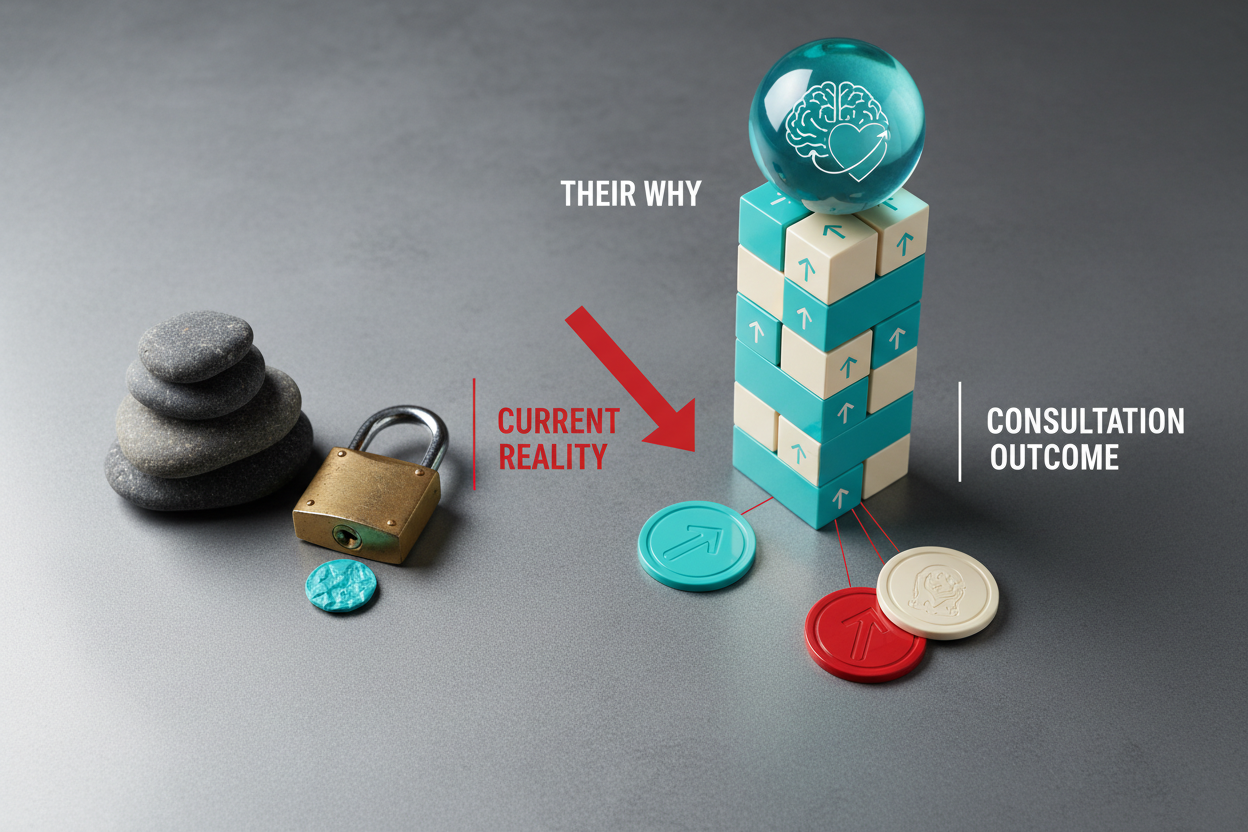
The Alignment Check Response
When "I can't afford it" lands on the table, resist the urge to negotiate. Instead, adopt a coaching stance. Your role isn't to convince—it's to clarify.
The Three Questions That Reveal Everything
Try this approach:
"Help me understand—is this about cash flow timing, or is there something about the solution that doesn't feel right?"
This single question separates genuine budget constraints from value perception gaps. Cash flow timing is logistical—you can work with that. "Doesn't feel right" is diagnostic gold.
"If cost weren't a factor at all, would this feel like the right solution for you?"
Watch their face. Listen to the pause. If they hesitate, money isn't the issue. They're uncertain about something else—and that uncertainty is what you need to explore.
"What would need to be true for this to feel like an obvious yes?"
This invites them to articulate their remaining concerns. Often, they'll reveal the real objection they've been protecting with the affordability shield.
When It Actually Is About Money
Sometimes—perhaps 10-15% of the time—the prospect genuinely lacks the resources. Cash flow is tight. The timing is wrong. In these cases:
- Honor their honesty
- Explore whether there's a smaller engagement that creates value now
- Establish what conditions would need to change for future conversation
- Leave the door open without desperation
The key distinction: arrive at this conclusion through exploration, not assumption.

Rebuilding the Value Connection
Once you've identified the true concern beneath "I can't afford it," you have an opportunity to rebuild connection. This isn't about pressure—it's about service.
Return to Their Pain
Go back to the moment in your conversation when they described their struggle. Use their exact language:
"Earlier, you mentioned that you're spending thirty hours a week on tasks your team should handle, and it's keeping you from the strategic work that actually grows the business. Help me understand—what happens if that continues for another year?"
When you articulate their pain more clearly than they can, trust deepens. They feel understood. And understanding is the foundation of perceived value.
Make the Cost of Inaction Visible
Most prospects focus on the cost of action—your fee, the time investment, the risk. Your job is to balance that equation with the cost of inaction.
What will they lose—in revenue, time, opportunities, sanity—if they remain stuck? What does another year of this problem look like? Not as guilt manipulation, but as honest exploration.
Our value alignment conversation framework provides a structured approach to these discussions.
Connect to Their 'Why'
Behind every business problem is a human one. They're not just trying to fix operations—they're trying to get home for dinner. They're not just trying to increase revenue—they're trying to stop feeling like a fraud. They're not just trying to scale—they're trying to prove something to themselves or someone else.
When you connect your solution to their deeper why, price becomes context rather than obstacle.
Prevention: Consultation Design That Preempts Objections
The best response to "I can't afford it" is never hearing it in the first place. This requires intentional consultation architecture.
Establish Value Before Discussing Price
The majority of your consultation should focus on three things:
- Deep understanding of their specific situation—not surface symptoms, but root causes
- Clear articulation of what's at stake—the cost of continued struggle
- Vivid description of the transformation—what life and business look like on the other side
Price enters the conversation only after these elements are firmly established. When value is clear, price becomes investment rather than expense.
Ask the Hard Questions Early
Don't wait until the end to surface objections. Throughout your conversation, check alignment:
- "Does this resonate with what you're experiencing?"
- "Is this the core issue, or is there something underneath it?"
- "What concerns do you have about approaching it this way?"
These questions invite objections when you can still address them—not when they've calcified into polite rejection.
The Shift That Changes Everything
Stop treating "I can't afford it" as a negotiation trigger. Start treating it as feedback about your consultation.
This reframe isn't about blame—it's about power. When the objection is about money, you're helpless. When it's about connection and clarity, you have agency. You can ask better questions. You can dig deeper. You can surface the real concern and address it directly.
The prospect who says "I can't afford it" is rarely lying. They genuinely can't afford something—they can't afford to invest in something that doesn't feel certain, safe, and specifically designed for their pain.
Your job isn't to make it cheaper. Your job is to make it undeniable.

Frequently Asked Questions
What does the 'I can't afford it' objection actually mean in sales?
The 'I can't afford it' objection typically signals a value perception gap rather than a genuine budget constraint. The vast majority of the time, this objection masks deeper concerns—the prospect doesn't see how your solution directly solves their specific problem. It reveals that something was missed during the consultation that would have connected your offer to their true pain point.
What is a value perception gap in sales consultations?
A value perception gap occurs when the prospect cannot see how your solution's benefits outweigh its cost for their specific situation. This happens when the salesperson fails to uncover the prospect's true problem, misses their underlying 'why,' or doesn't tie the product benefits back to the prospect's specific pain points. The gap exists between what you know your solution can do and what the prospect believes it will do for them.
How does 'I can't afford it' compare to 'it's too expensive' as an objection?
'I can't afford it' and 'it's too expensive' both indicate value perception issues, but they signal different underlying concerns. 'I can't afford it' often masks fear, priority questions, or uncertainty about ROI. 'It's too expensive' more directly challenges whether the solution is worth its price point. Both require value clarification rather than price negotiation, but 'I can't afford it' typically needs deeper exploration of the prospect's real concerns.
How does a value-based sales approach compare to discount-based objection handling?
Value-based approaches focus on deepening the prospect's understanding of how your solution solves their specific problem, maintaining both price integrity and authority. Discount-based handling immediately reduces price, which undercuts your income and signals that the original price wasn't justified. Slashing prices rarely fixes value perception problems—it just makes the same unconvincing offer cheaper.
Why do prospects say 'I can't afford it' when they actually have the budget?
Prospects with available budget use 'I can't afford it' as a protective response when they're uncertain about the investment's outcome. They may fear the solution won't work for them, feel unclear about the ROI, or doubt whether now is the right time. This objection serves as a socially acceptable exit when the real issue—lack of confidence in the value exchange—feels too awkward to articulate directly.
Continue with the strongest related paths.
These links stay inside the same published content group so the next step feels like a continuation of the answer, not a detour.
What Is the Core Cycle? The Natural Rhythm Behind Sustainable Business Growth
Learn the Core Cycle framework—Reveal, Refine, Enable, Optimize—for sustainable business transformation without disrupting your operations. Start where friction is highest.
The Listening Gap: Why Your Prospects Don't Feel Understood (And Say They Can't Afford You)
When prospects say 'I can't afford it,' they're often saying 'you didn't hear me.' This article examines how rushing to present solutions before fully understanding the prospect's true problem creates a disconnect that no amount of feature-selling can bridge. The gap isn't in your pitch—it's in your listening.
Building Systems You Can See, Question, and Lead: The Architecture of Sustainable Growth
Learn how integrated business systems create growth you can trust. Discover the architecture that makes operations visible, decisions traceable, and results predictable.
Consultation Architecture
Consultation architecture refers to the intentional structure and design of sales consultation conversations. Rather than improvising, effective consultants design their conversations to establish value before discussing price. This includes deep exploration of the prospect's specific situation, clear articulation of what's at stake if the problem continues, and vivid description of the transformation. When consultation architecture is done well, price objections rarely emerge because value has
Consultation Gap
Consultation gap refers to a specific moment in a sales conversation where connection between consultant and prospect breaks down. This happens when a consultant fails to adequately explore the prospect's pain points, connect the solution to meaningful outcomes, or help them understand the cost of staying stuck. When this gap occurs, prospects resort to objections like 'I can't afford it' even when budget isn't their real concern.
AI Alignment Priority Order
AI Alignment Priority Order is a three-layer sequential framework for improving visibility in AI recommendation engines. It requires businesses to first establish clarity by unifying their identity across all digital platforms, then build trust through reviews and third-party mentions, and finally optimize content for AI parsing. This specific order matters because each layer depends on the one below it.
AI Recommendation Engines
AI recommendation engines are systems like ChatGPT, Perplexity, and Gemini that answer questions by synthesizing information from across the web rather than just showing search results. When someone asks for a business recommendation, these engines evaluate multiple signals including your website, reviews, directory listings, and third-party mentions to decide whether to recommend you. They require clarity, consistency, and external validation before citing a business with confidence.
Stay Informed
Weekly insights, no spam