

The Brand Identity Alignment Audit: A 90-Day Framework for Service Business Owners

Credentials
20+ yrs operational leadership | 300+ team across 7 locations at peak | 1,000+ led career-total | Diamond-level Allergan (#3 nationally) | VC / strategic investment evaluation | Startup operator | Top 1% national revenue | Automation systems since 2006
A brand identity audit examines alignment across visual, verbal, and experiential layers at every client touchpoint. Start by mapping your current touchpoints, identifying inconsistencies, and prioritizing fixes by client impact. Most service businesses find the biggest gaps in verbal identity and the handoff between marketing and service delivery.
You know something's off. Clients seem confused about what you actually do. Your team describes your business differently depending on who's talking. Your website says one thing, your proposals say another, and the experience clients receive matches neither. This isn't a branding problem in the traditional sense—it's an alignment problem. And alignment problems compound.
Research consistently shows that brand identity shapes how you position yourself in the market while brand image reveals how effectively that positioning lands. When these two diverge, trust erodes. Referrals become harder to earn. Pricing power weakens. The gap between what you intend and what clients perceive costs you—not in dramatic failures, but in the slow leak of opportunities that never quite materialize.
This framework isn't theory. It's a working tool designed for service business owners who sense the gaps but don't know where to start. Over the next 90 days, you'll systematically audit your visual, verbal, and experiential identity, then implement prioritized fixes that close the gap between intention and perception.
Understanding the Three Layers of Brand Identity
Before you can audit anything, you need a clear map of what you're auditing. Brand identity for service businesses operates across three distinct layers, and gaps can hide in any of them.
Visual Identity: What Clients See
Visual identity includes your logo, color palette, typography, photography style, and the physical environment where you deliver services. For service businesses, visual consistency matters most at transition points—where a client moves from your website to your physical space, or from a marketing email to a consultation room. The question isn't whether your logo is beautiful. The question is: does every visual element feel like it came from the same organization?
Verbal Identity: What Clients Hear and Read
Verbal identity encompasses your messaging, tone of voice, the specific words you use to describe your services, and how your team speaks to clients. This layer creates the most confusion for service businesses because it's distributed across multiple people. Your website copy might be polished, but how does your intake coordinator answer the phone? What language appears in your invoices? Identity is the promise you make, while image is how well people think you're keeping it. Verbal inconsistencies signal broken promises.
Experiential Identity: What Clients Feel
Experiential identity is the hardest to control and the most impactful. It includes the quality of your service delivery, the feeling clients have during interactions, wait times, follow-up practices, and every human moment between first inquiry and final invoice. Strong brands don't confuse identity and image—they align them intentionally. For understanding the fundamental distinction, see our guide on brand identity versus brand image.
Phase One: The Touchpoint Mapping Exercise (Days 1-10)
Your first task is creating a complete inventory of every moment a client interacts with your brand. This sounds simple. It isn't. Most service business owners dramatically underestimate how many touchpoints they actually have.
Mapping Pre-Client Touchpoints
Start with everything a potential client encounters before becoming a client. This includes your website (every page, not just the homepage), social media profiles, directory listings, Google Business Profile, review responses, any advertising, networking materials, referral conversations your existing clients have about you, and your personal LinkedIn presence. Document each touchpoint on a simple spreadsheet with columns for: touchpoint name, current state (screenshot or description), and initial observations.
Mapping Active Client Touchpoints
Now document every interaction during the client relationship. This includes inquiry response (email templates, phone scripts), scheduling process, intake forms, consultation environment, service delivery experience, communication during service, invoicing and payment, and follow-up sequences. For each, gather actual examples. Don't rely on memory. Pull the real email templates your team sends. Record a phone call. Take photos of your physical space.
Mapping Post-Client Touchpoints
Finally, document what happens after the active engagement ends: review requests, referral programs, re-engagement campaigns, and ongoing communication. These touchpoints often reveal the starkest identity gaps because they receive the least attention. Industry analysis consistently shows that strong brands proactively shape public image through authentic identity alignment, making this a core strategy for growth-stage service businesses.

Phase Two: The Gap Identification Process (Days 11-30)
With your touchpoint inventory complete, you can begin the actual audit. This phase requires uncomfortable honesty about where your brand identity fractures.
The Side-by-Side Test
Print or display your touchpoint materials side by side. Literally spread them across a conference table or tile them on your screen. Now ask yourself: if someone saw these without knowing they came from the same business, would they connect them? Look for visual disconnects first—color variations, typography inconsistencies, photography style shifts. Then listen for verbal disconnects—tone changes, vocabulary shifts, personality differences. Document every disconnect you find.
The Promise-Experience Gap Analysis
Your marketing makes promises. Your operations either keep them or break them. Create two columns: marketing promises (what your website, social media, and sales conversations say you deliver) and operational reality (what clients actually experience). This exercise requires honesty that might sting. If your website promises "personalized attention" but clients routinely wait 48 hours for email responses, that's a gap. If you claim "premium quality" but your invoices arrive as plain text emails, that's a gap. For a deeper framework on this analysis, explore our article on brand identity as a business strategy tool.
The Team Consistency Check
Ask three team members to independently describe your business in two sentences. Ask them to explain what makes you different from competitors. Ask them to describe your ideal client. If their answers diverge significantly, you've found a verbal identity gap that's likely bleeding into client interactions. Current industry trend analysis shows that the gap between controlled brand identity and fluid public brand image closes through consistent application across digital and in-person touchpoints.

Phase Three: Prioritizing Fixes by Impact (Days 31-45)
You now have a list of gaps. The temptation is to fix everything. Resist it. Not all gaps carry equal weight, and attempting too much simultaneously guarantees completing nothing.
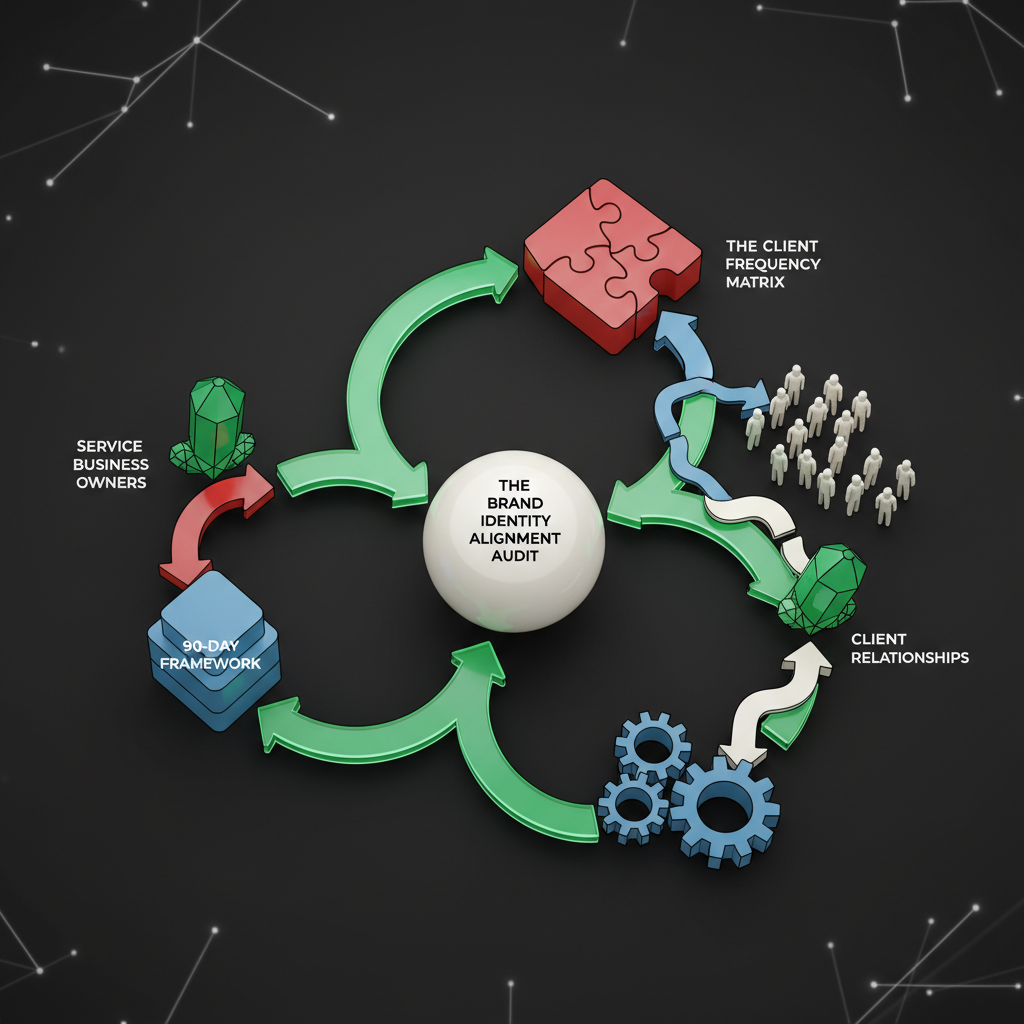
The Client Frequency Matrix
Rank your gaps by two criteria: how many clients encounter this touchpoint, and how much trust damage the gap creates. A misaligned social media bio matters less than an inconsistent phone greeting because fewer prospective clients see your bio, and those who do have invested less in the relationship. Your email response templates likely affect more clients more often than your physical signage. A visual inconsistency in your proposals matters more than a color variation in your Facebook banner.
The Trust Erosion Assessment
Some gaps create confusion. Others create distrust. Distrust gaps require immediate attention. A verbal promise of "white-glove service" paired with an automated, impersonal onboarding sequence creates distrust. A slight typography inconsistency between your website and your business cards creates confusion but not distrust. Focus first on fixes that address trust erosion. Competitive analysis reveals that businesses lacking alignment risk weaker loyalty—Apple's consistent identity of innovation reinforces positioning precisely because it never contradicts the experience.
The Implementation Reality Filter
Finally, filter your priorities through what you can actually implement. A complete visual rebrand might close significant gaps, but if it requires six months and $50,000, it shouldn't be your first priority. Some fixes—updating email templates, creating phone greeting standards, revising your intake form language—can happen this week. Prioritize high-impact fixes you can implement quickly over perfect fixes that require extensive resources.
Phase Four: The 30-Day Implementation Sprint (Days 46-75)
With priorities set, execute a focused 30-day sprint on your top-tier fixes. This phase requires discipline because the temptation to scope-creep into additional improvements will be strong.
Week One: Verbal Identity Fixes
Start with verbal identity because it affects the most touchpoints simultaneously. Create a brand voice guide limited to one page: three words that describe your tone, three examples of how you speak, three examples of how you don't speak. Then revise your email templates, phone greeting, and intake communications to match. Train your team on the new standards with specific examples, not abstract guidelines. For a systematic approach to maintaining verbal consistency, see our resource on brand identity consistency for service businesses.
Week Two: Transition Point Fixes
Focus on the handoffs—moments where clients move between brand touchpoints. The transition from marketing impression to first service experience is where most service businesses fracture. If your website creates luxury expectations but your intake process feels clinical, fix the intake process to match the expectation you've set. If your consultation environment doesn't match your marketing photography, address the physical space.
Weeks Three and Four: Operational Alignment
Now address the promise-experience gaps you identified. This might require operational changes, not just communication changes. If you promise personalized service, you might need to restructure how you respond to inquiries. If you promise expertise, you might need to revise how team members are introduced to clients. These fixes take longer because they affect workflows, not just words.
Phase Five: Measurement and Refinement (Days 76-90)
The final phase establishes whether your fixes are working and creates systems for ongoing alignment.
Client Perception Check
Survey five to ten clients who experienced your brand both before and after your fixes. Ask: "How would you describe what we do to a friend?" Compare their answers to your intended brand identity. The closer the match, the more successfully you've closed the gap. Ask what surprised them during the client experience—surprises indicate remaining misalignments.
Team Alignment Retest
Repeat the team consistency check from Phase Two. Ask the same questions to the same people. Are their answers more aligned now? Can they articulate the brand voice guide? Do they understand which promises the brand makes and how operations fulfill them?
Establishing Ongoing Monitoring
Create a quarterly brand alignment review. Every 90 days, select five random touchpoints and evaluate them against your standards. Review new team members' understanding of brand voice. Assess whether any new touchpoints have been added without alignment consideration. Brand identity alignment isn't a project with an end date—it's an ongoing discipline.
Taking Your First Step This Week
You don't need to wait 90 days to start seeing value. This week, complete one exercise: ask three clients to describe your business in their own words. Compare their descriptions to your website's primary headline. The distance between those two statements tells you everything about the work ahead.
Alignment creates compound returns. Every touchpoint you fix makes the next fix easier because your standard becomes clearer. Every team member who internalizes your verbal identity reduces the management overhead of maintaining consistency. Every client who encounters a coherent brand becomes a clearer referral source.
The gap between intention and perception closes one touchpoint at a time. Start with the touchpoint that affects the most clients most frequently. Document the current state. Fix it. Move to the next. In 90 days, you won't just have a more aligned brand—you'll have a system for keeping it aligned as you grow.
Frequently Asked Questions
What touchpoints should I audit for brand identity alignment?
Audit every client-facing moment: website, social media, inquiry response, phone greeting, consultation environment, service delivery, invoicing, and follow-up communication. For service businesses, also audit internal touchpoints: team onboarding, meeting culture, and decision-making language. Gaps often hide in transitions—where marketing hands off to operations.
How do I identify brand identity gaps in my service business?
Collect real examples from each touchpoint: screenshots, email templates, recorded calls, physical materials. Lay them side by side and ask: Do these feel like they came from the same organization? Where does tone shift? Where does visual quality drop? Where does the experience contradict the promise? Document every disconnect you find.
What brand identity fixes should I prioritize first?
Prioritize by client impact, not ease. Fix gaps that affect the most clients most frequently first. For most service businesses: email response templates, phone manner standards, and the transition between marketing impression and first service experience. Visual tweaks can wait—verbal and experiential gaps erode trust faster.
What is the ROI of a brand identity audit?
Direct ROI includes: reduced client confusion (fewer explanatory conversations), improved trust (higher conversion rates), stronger referrals (clients can clearly describe you), and team alignment (less management time spent on tone-policing). Indirect ROI includes pricing power and hiring quality. Most service businesses see measurable trust improvements within 90 days of implementing fixes.
Should I hire an agency or do a brand identity audit myself?
Start yourself. You know where clients express confusion, where team members improvise, and where promises break down. An external agency adds value for visual redesign or messaging architecture, but the diagnostic work—mapping touchpoints and identifying gaps—is founder work. Do the audit yourself first; then engage experts for specific fixes you can't implement alone.
Sources
Continue with the strongest related paths.
These links stay inside the same published content group so the next step feels like a continuation of the answer, not a detour.
Brand Identity Is Not Your Logo: The Complete Picture 70-85% of Business Owners Miss
Brand identity isn't just your logo. Learn the three interconnected layers—visual, verbal, and experiential—that determine whether clients trust your business.
"Consistent vs. Cohesive Brand Identity: Why 60-80% of Brand Touchpoints Fail to Build Trust"
Learn why brand consistency without cohesion creates hollow repetition. Discover how to build strategic brand alignment that adapts to context and builds trust.
Why Your Brand Feels Disconnected from Your Purpose (And What to Do About It)
Most leaders sense when their brand doesn't match their organization's soul—they just can't name the gap. This piece names the specific disconnects between branding and mission/vision/values/UVP, helping readers diagnose what's actually broken before attempting fixes.
Active Client Touchpoints
Active Client Touchpoints are all interactions that happen during the working relationship with a client. This includes inquiry responses, scheduling, consultations, service delivery, and invoicing. These touchpoints are critical because clients are actively judging whether you are keeping the promises your marketing made.
Brand Alignment
Brand Alignment refers to the intentional coordination of a brand's visual, verbal, and experiential identity to ensure consistency and cohesion across all customer touchpoints.
Brand Identity Audit
A Brand Identity Audit refers to a systematic review of a brand's visual, verbal, and experiential identity. The goal is to identify any inconsistencies, prioritize the most impactful fixes, and implement changes to improve alignment across all customer touchpoints.
Client Frequency Matrix
Client Frequency Matrix is a prioritization tool that ranks brand identity gaps based on two factors: how many clients encounter each touchpoint and how much trust damage the gap creates. This helps businesses focus on fixing the most impactful inconsistencies first rather than trying to address everything at once.
Stay Informed
Weekly insights, no spam